Noble Deep · Casper AUV
Subsea inspection campaigns cost operators about $150K per vessel day.
Casper is an autonomous underwater vehicle that stays on site and inspects subsea infrastructure continuously, without relying on chartered survey vessels. Operators get condition reports that catch damage early, so repairs are planned instead of rushed.
Draper University
Alumni Company
Finalist
Ocean Exchange 2026 Collegiate Awards
Illustration: an autonomous underwater vehicle follows an export cable across the seabed of an offshore wind site, scans it, flags cable exposure in a scour pit beside a turbine foundation, and posts a condition report.
01The Problem
Subsea infrastructure fails between inspections. When a survey vessel visits only a few times a year, a cable can sit exposed or scour can deepen around a foundation for months before anyone sees it.
02Casper
Inspection that stays on site.
Continuous Inspection
Casper works on site on a recurring schedule, so inspection doesn't stop when weather keeps vessels in port.
Built for Offshore Wind
Casper inspects export and array cables, foundations, seabed scour, and mooring lines, at depths to 300 m.
Actionable Data
Instead of raw footage, operations teams receive anomaly alerts, structural trend data, and condition reports that show what changed and where.
300 m
Rated depth
≤100 m
Typical operating depth
TRL 4
Current validation stage
03Applications
Built for offshore wind first.
Casper inspects infrastructure at depths to 300 m, starting with the cables, foundations, and moorings of offshore wind farms. Deeper basins and environmental monitoring are future applications. Select a location to see the use case.
Offshore wind · Lead market
Further applications
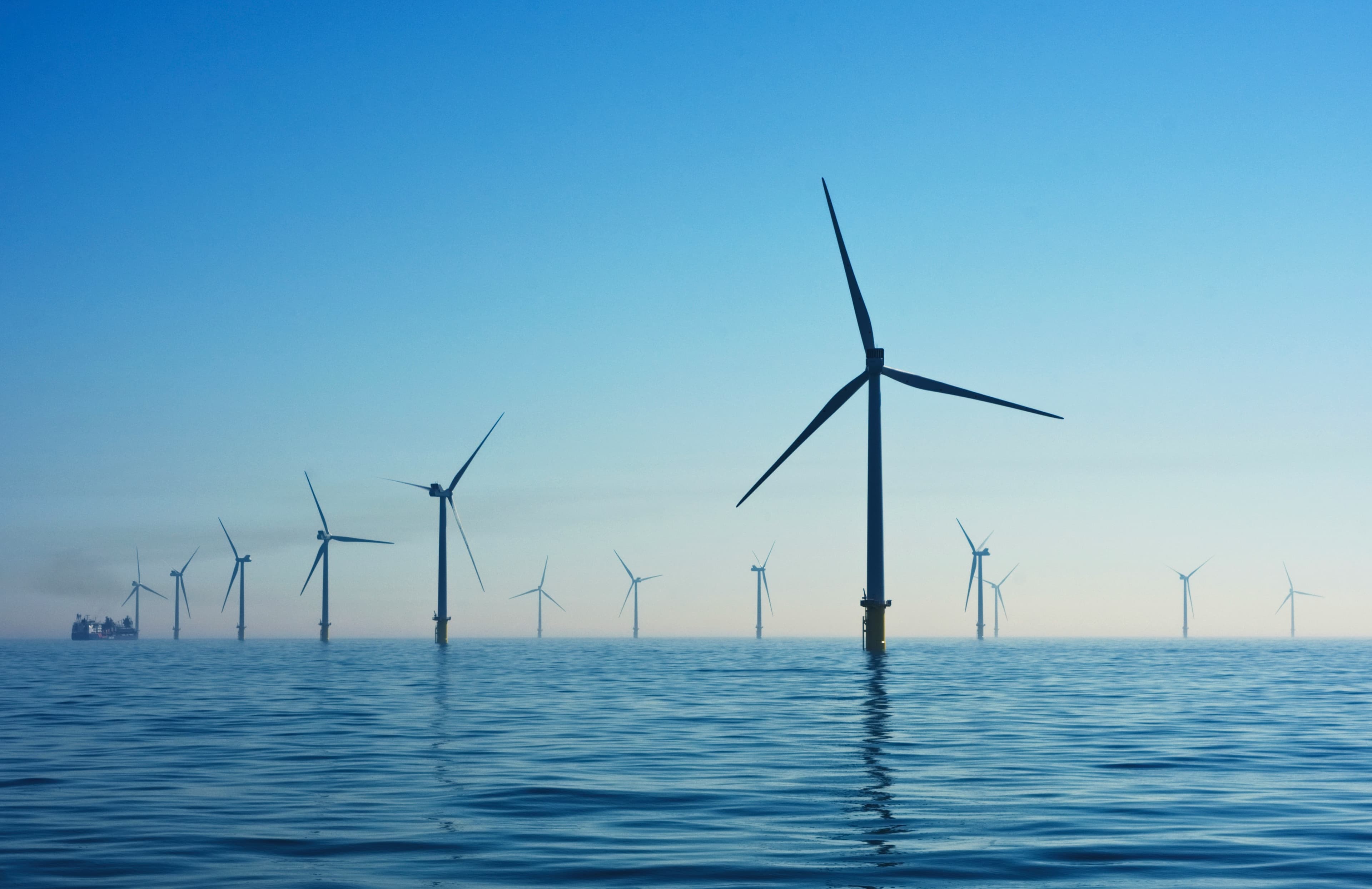
North Sea, Europe
Photo by Nicholas Doherty on Unsplash
Offshore wind · Lead market
Offshore Wind
The North Sea is Europe's largest offshore wind region, and much of each farm's risk sits on the seabed. Casper inspects these assets on a recurring schedule, so operators see burial depth and scour change between campaigns instead of discovering the damage after a fault.
- Export and array cables lose burial as sediment moves, leaving them exposed or free-spanning.
- Scour strips sediment and rock protection from around monopile foundations.
- Floating wind turbines depend on mooring lines that wear and fatigue over time.
Ready to close the monitoring gap?
We're working with early partners to validate Casper in live offshore environments.